
Norfolk County 14 towns and cities
- Braintree
- Brookline
- Canton
- Cohasset
- Dedham
- Dover
- Milton
- Needham
- Norwood
- Quincy
- Randolph
- Wellesley
- Westwood
- Weymouth
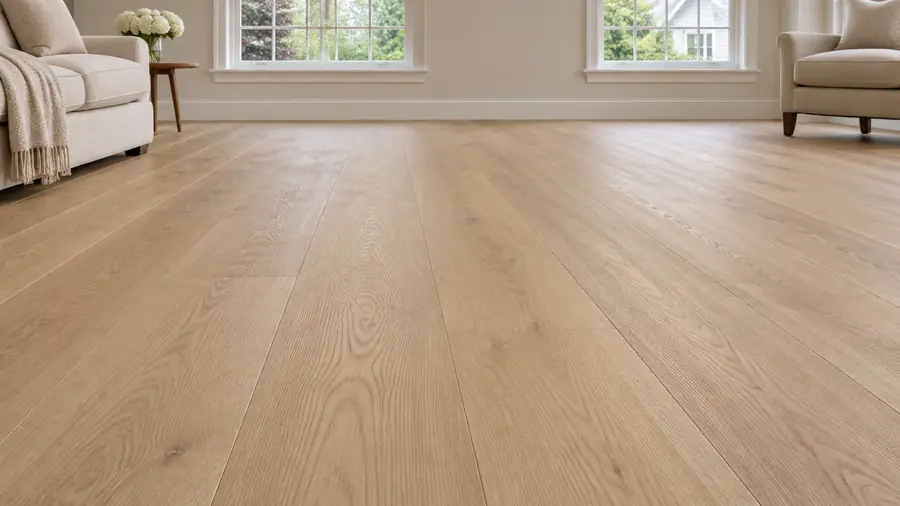
Real wood, more places
Engineered hardwood flooring installed in homes across Greater Boston: a real wood surface over a stable core, for rooms where solid hardwood is a poor fit, such as concrete slabs and basements, from a licensed and insured team in Norwood.
The product
Engineered hardwood flooring is made of a top layer of real wood, called the wear layer, bonded to a core of plywood or other wood layers set in different directions. The surface looks and feels like hardwood, while the layered core keeps the board more stable when humidity and temperature change.
Engineered boards are not all the same. The thickness of the wear layer, the core, and the finish vary a lot from one product to another, and we help you compare them before you buy. For rooms with a wood subfloor and normal conditions, solid hardwood floor installation is also an option.
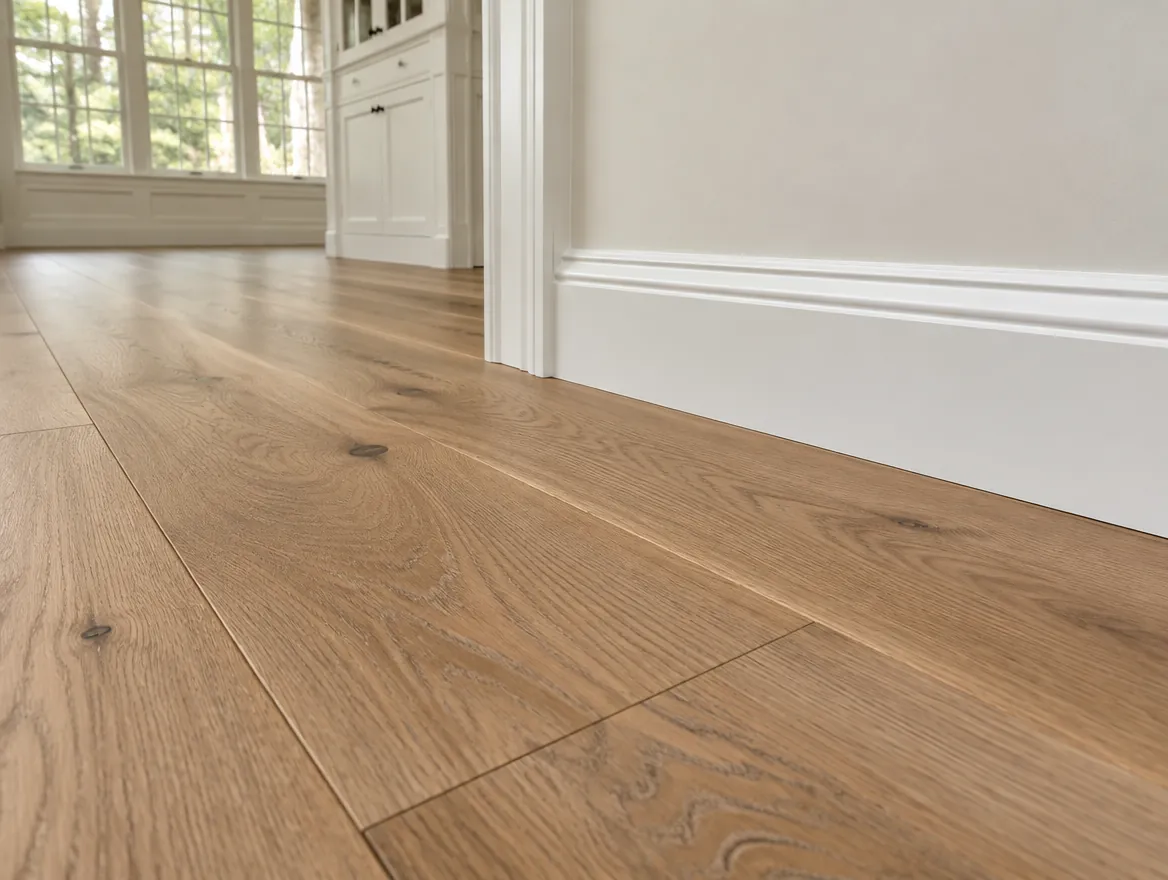
Engineered or solid
Solid hardwood is a great floor, but not for every room. Engineered hardwood flooring makes sense when moisture, a concrete slab, or a need for wide, stable planks would cause problems with solid boards. These are the situations where we most often recommend it during an estimate.
Methods
The installation method depends on the product and on what is under the floor. Some engineered boards are fastened like solid hardwood, others are glued to the subfloor, and some are designed to float. We confirm the method the manufacturer allows for your product and your subfloor before the work begins.
Over a wood subfloor, much like a solid hardwood floor.
Bonded to the subfloor, a common choice over concrete slabs.
Boards joined to each other over an underlayment, not fastened down.
Whatever the method, the floor is only as good as the base under it. The subfloor has to be flat, clean, and dry, and on concrete we check the moisture before anything goes down. If you are comparing engineered wood with luxury vinyl plank for a basement, we explain both at the estimate.
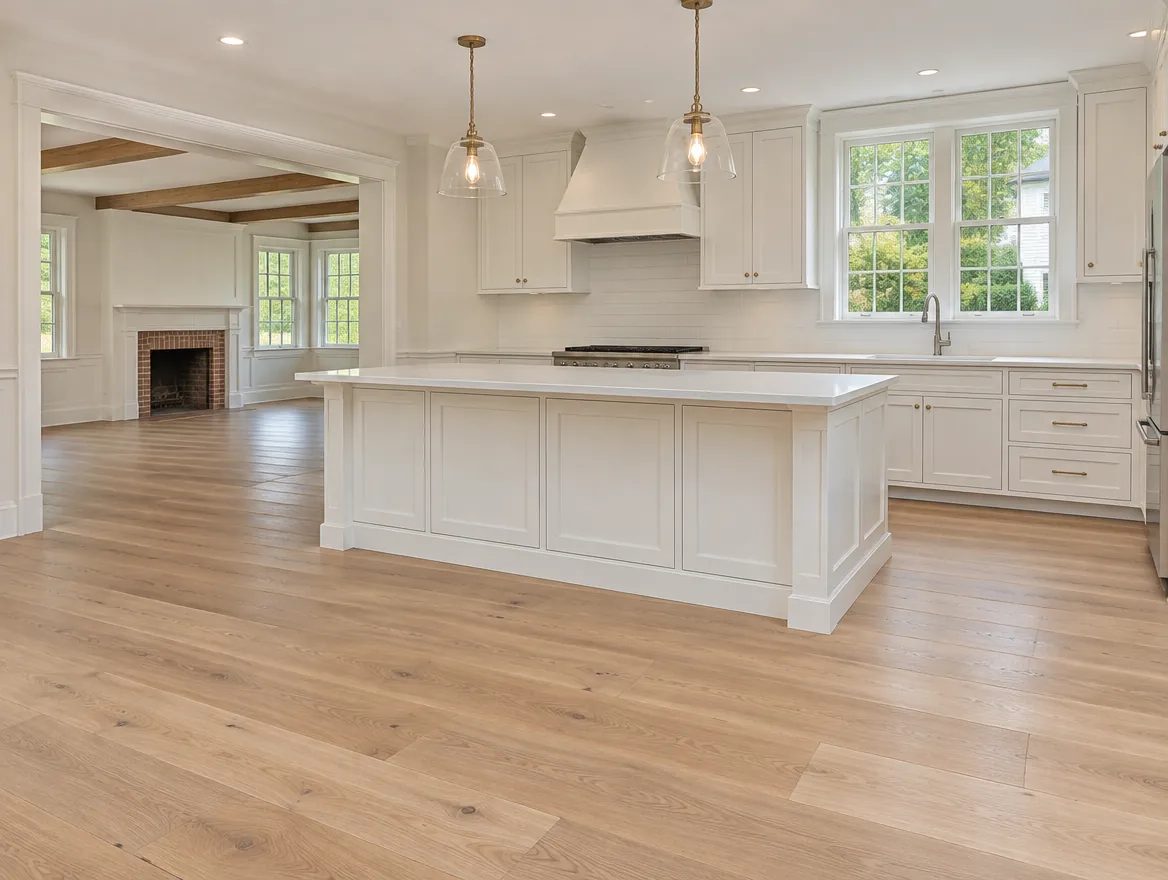
Our process
An engineered hardwood project follows the same order as any new floor: we look at the space, help you choose a product that suits the subfloor, prepare the rooms, install the boards, and finish the details at walls, doors, and stairs. You know which rooms are closed and for how long before we start.
We measure, look at the subfloor, and check for moisture on concrete.
We compare wear layer, width, and color with you.
Rooms are cleared and the subfloor is made ready for the method.
Boards are installed, fitted, and trimmed at walls and doorways.
Pricing
The cost of engineered hardwood flooring depends on the product as much as on the installation. Wear layer thickness, species, plank width, and finish change the price of the material, while the square footage, the subfloor, the installation method, and any existing floor to remove change the labor.
We do not quote over the phone. At the free in-home estimate we measure, look at the subfloor, and send a written price that lists what is included. GB Hardwood Floor Inc is licensed and insured, and proof of insurance is available before the work begins. We are a local company with our office in Norwood, and our team brings more than seventeen years of experience with hardwood floors.
Where we work
We offer engineered hardwood flooring in thirty-two cities and towns across Greater Boston, in Norfolk, Middlesex, Suffolk, and Plymouth Counties, working out of our office in Norwood. It suits the basements, slab additions, and condos found all over the region.
Free estimate
Tell us about the rooms, what is under the current floor, and the look you want. We will visit your home, measure, check the subfloor and moisture, and help you choose the right engineered product. Then we send a written estimate, with no cost and no obligation to hire us.
Prefer to talk? Call (857) 540-2447
FAQ
These are the questions homeowners ask most often about engineered hardwood flooring before they hire a flooring company in Greater Boston: what it is, where it works, installation methods, refinishing, and cost. If your question is not listed here, send it with your estimate request and we will answer it before any work is scheduled.
Engineered hardwood flooring is a board with a top layer of real wood bonded to a core of plywood or other wood layers. The surface looks like solid hardwood, while the layered core makes the board more stable when humidity changes. That stability is why it can go in places where solid hardwood is not recommended.
Yes. The surface you see and walk on is a real wood veneer, often oak, and the core underneath is also made of wood layers. It is different from vinyl products that only print a wood image. That real surface is why engineered hardwood looks and feels like a traditional hardwood floor once it is installed.
Many engineered products can be installed over concrete, either glued down or floating over an underlayment, depending on what the manufacturer allows. The slab has to be flat and dry enough, so we check it before installation. This is one of the main reasons homeowners choose engineered hardwood instead of solid wood.
Some engineered products are approved for below-grade rooms, as long as the basement stays dry and the slab passes a moisture check. If a basement has moisture problems or occasional water, luxury vinyl plank is usually the safer choice. We look at the space during the estimate and tell you honestly which floor fits it.
It depends on the thickness of the wear layer. Products with a thicker wear layer can be sanded and refinished, sometimes more than once, while thin wear layers allow little or no sanding. When we help you choose a product, we point out the wear layer, so you know what to expect years from now.
Neither is better in every case. Solid hardwood can be refinished many times and suits rooms with a wood subfloor and normal conditions. Engineered hardwood handles humidity changes and concrete slabs better, and wide planks stay flatter. The right choice depends on the room, the subfloor, and how you use the space.
The method depends on the product and the subfloor. Over a wood subfloor, many engineered floors are nailed or stapled like solid hardwood. Over concrete, glue-down or floating installations are common. We follow the method the manufacturer allows for your product and explain it in the estimate before any work starts.
It depends on the square footage, the subfloor preparation, the installation method, and any existing floor that has to come out first. Engineered floors usually arrive prefinished, so there is no sanding or finish drying in the house. We give you a realistic schedule in the estimate and plan the rooms with you.
Yes. Engineered products vary widely in wear layer, core, width, and finish, and the differences are not obvious in a showroom. During the estimate we look at your rooms and subfloor, explain what matters for your space, and help you compare options, so the floor you buy suits the place where it goes.
The total depends on the product you choose, including wear layer, species, width, and finish, and on the square footage, the subfloor, the installation method, and any existing floor to remove. We do not quote over the phone. We measure and check the subfloor at a free in-home estimate and send a written price.